Just a few kilometers ahead of Kathalekan along the Siddapur-Honnavar highway, a hidden swamp wallows in the low-lying dense forests of the Sharavathi.
Malemane (literally “forest-house” or “house in the forest”) falls along the Kathalekan belt of swamps, an interconnected series of Myristica swamps along a perennial stream. Each successive swamp collects runoff from the highway and surface flows from the rich forest, culminating in a powerful stream that joins the Sharavathi River. Malemane is part of this chain, playing an important role in regulating the hydrology of the watershed.
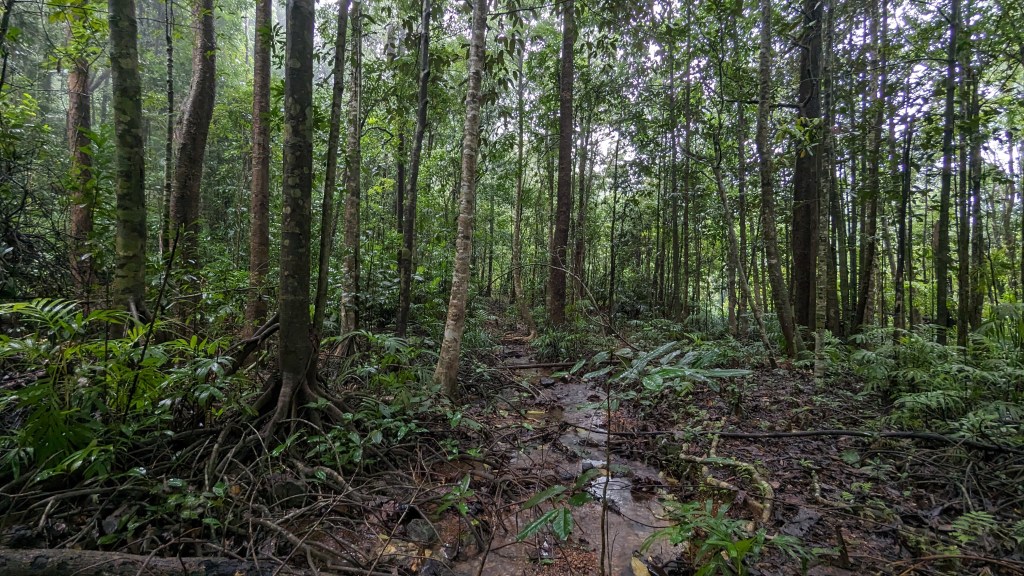
When I set foot in Malemane during the dry season, I was disappointed to find no standing water. The stream was almost dry, and I crunched through a carpet of fallen leaves all in shades of brown and yellow as I tried to find moisture in the cracked soil. Rohan and I were looking for odonates (damselflies and dragonflies) and water quality measurements, and when water is not there, the latter becomes impossible and the former equally difficult, given the habitat requirements of sensitive taxa like odonates. Only a few frogs scattered from our path and the birds appeared cheerful. Otherwise, Malemane was less a swamp forest and more a…regular forest.
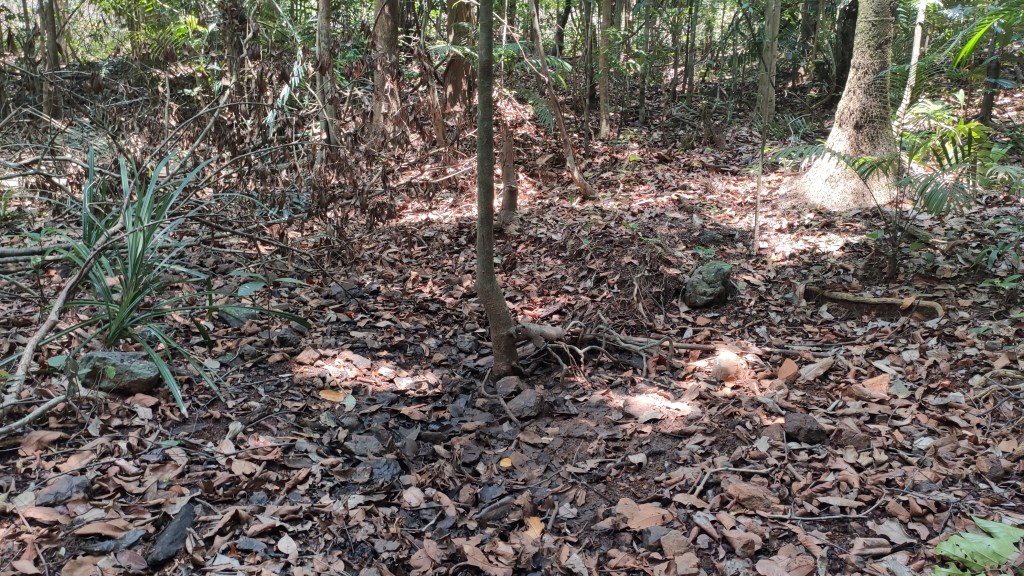
A regular, filthy forest. Locals have used Malemane as their trash bin. Its unfortunate placement by the road has made it the dumping ground for (a) people tossing waste from their cars, (b) people sitting on the roadside (there’s a convenient ledge above the swamp stream that people can sit on) and drinking, and (c) people partying inside the swamp (something I’m told is very popular in this part of the country). Cigarette butts, empty beer and wine bottles, wrappers, chips packets, plastic bags, and even clothes lay strewn in the stream bed, on the tree roots, and even slung on low-hanging tree branches. Someone had stacked up a few cans thoughtfully, perhaps trying to make trash into art in the swamp. They would have been better off collecting the trash and tossing it in the landfill, where it belongs.
**********************************
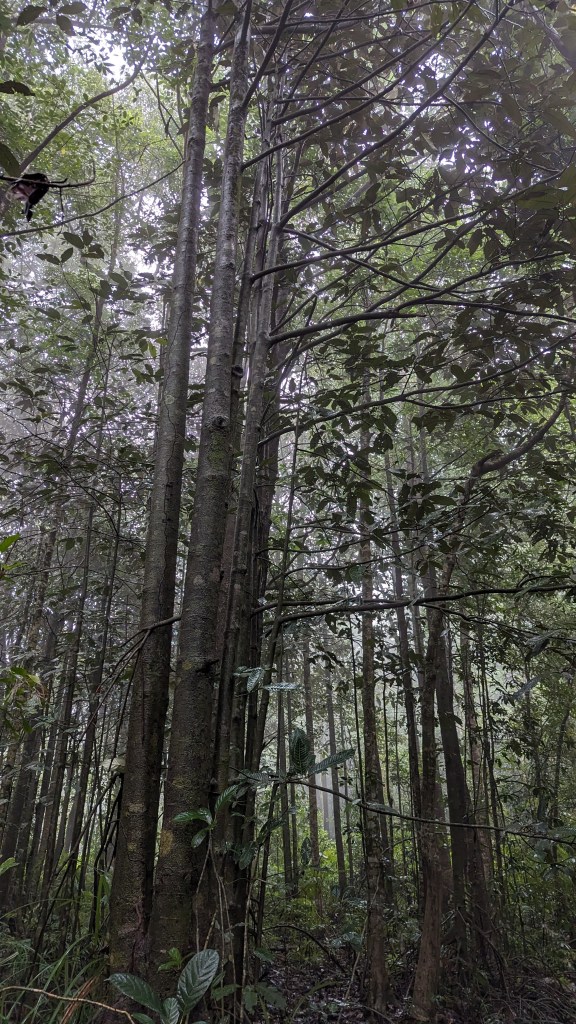
When I returned to Malemane in the monsoon with Dr. Ravikanth, we found water coursing merrily through the swamp. Finally, the swamp forests was looking like a proper swamp! Leeches inched their way towards us from the ground, even dropping onto our bare necks from the treetops. Tiny rasbora fish swam through the stream, pausing to nibble on my toes as I measured pH and electrical conductivity. Our dissolved oxygen meter is treated like a novelty food item by the tadpoles. The forest is alive with the shrill call of cicadas, a persistent orchestra with an invisible conductor. Birds/ong fills the air – the gentle hooting of the green imperial pigeon, the maniacal cackling of the Malabar pied hornbill, the sweet tweet-tweet of the paradise flycatcher. I keep a ear peeled for the distinctive hoarse cough of the lion-tailed macaque, but all I hear is a hoarse cough from Dr. Ravikanth. Alas.
As part of our work, we look at the levels of disturbance to these primitive swamp forests, relics of the past. Forests like these are storehouses for ancient species of trees; Myristicaceae is one of the earliest families of angiosperms (flowering plants) and originated well before India separated from Madagascar and floated to its current location. Understanding these forests and their biodiversity can help us piece together the history of the Western Ghats and identify the origins of many species that are found nowhere else on Earth. Species like the dancing frog, the lion-tailed macaque, the Malabar grey hornbill, and the Malabar pit viper are endemic to this region and more research is required to understand how habitat loss and forest fragmentation in the Western Ghats may impact their populations and survival in the decades to come. Studying water quality, flows into and out of swamps, and the conditions of the soil can help scientists restore degraded swamps and plant seedlings of endangered swamp trees like Semecarpus kathalekanensis and Myristica fatua to ensure that we don’t lose these endemic giants to climate change and encroachment.
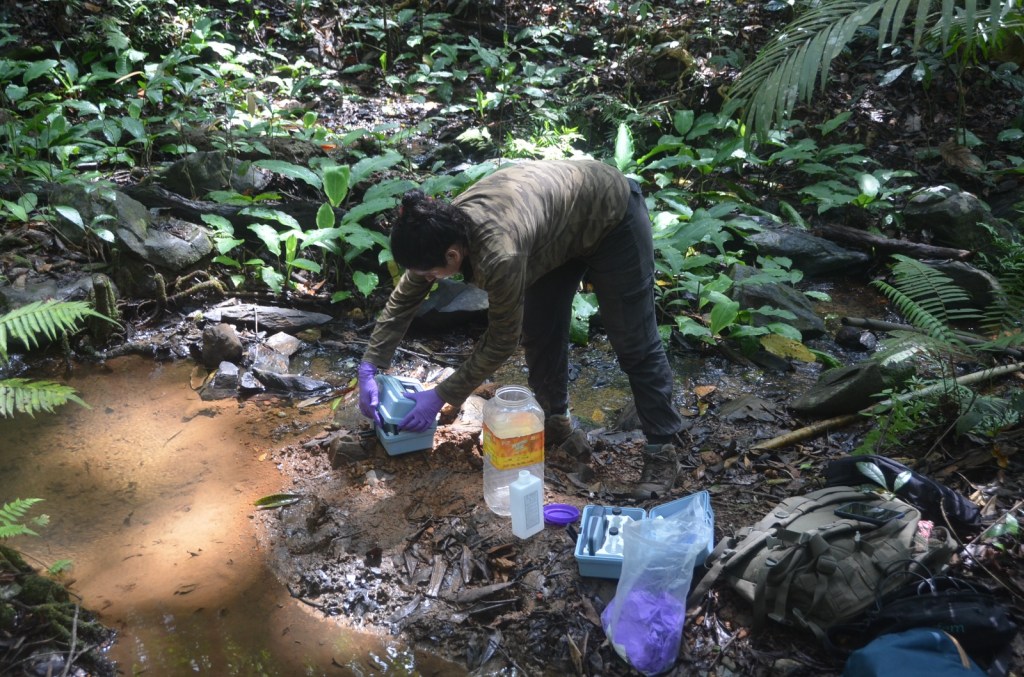
Pandanus leaves with their slick spines snatch at my raincoat and rainpants as I slog through the sludgy soil. Entering and leaving the swamp is often the hardest part of sampling; the actual fieldwork is quite relaxing once I’ve gotten the flow down. But slipping down the embankment, climbing over barbed wire fencing, and sometimes skidding on your backside down a rocky outcrop straight into a muddy stream are hazards that accompany fieldwork in these monsoon forests. As I struggle with 10 kgs of equipment (including a giant canister of toxic waste) up the embankment, I notice a sharp pricking sensation on my ankle. A leech – finally able to access bare skin as my sock has rolled down. Damn it. I can’t pull it off yet; my hands are full. So I let the little ingrate grow fat on my blood as I emerge from the swamp forest, my shoes coated in slick mud, my pants streaked in my own blood (thank you leeches), sweat dripping from my forehead. Once I have dumped my equipment in the backseat of our car, I bend to peel off the hungry leech. It has grown fat on my blood, and when I pull it off, a rivulet of red begins to flow down my leg. I grimace. The car will need a good wash tonight.

We bid farewell to Malemane and make our way down the winding, mist-ridden road. In the monsoon, even the dull tar looks magical, just like the swamp forest fading into the fog behind us.
 On Life and Wildlife